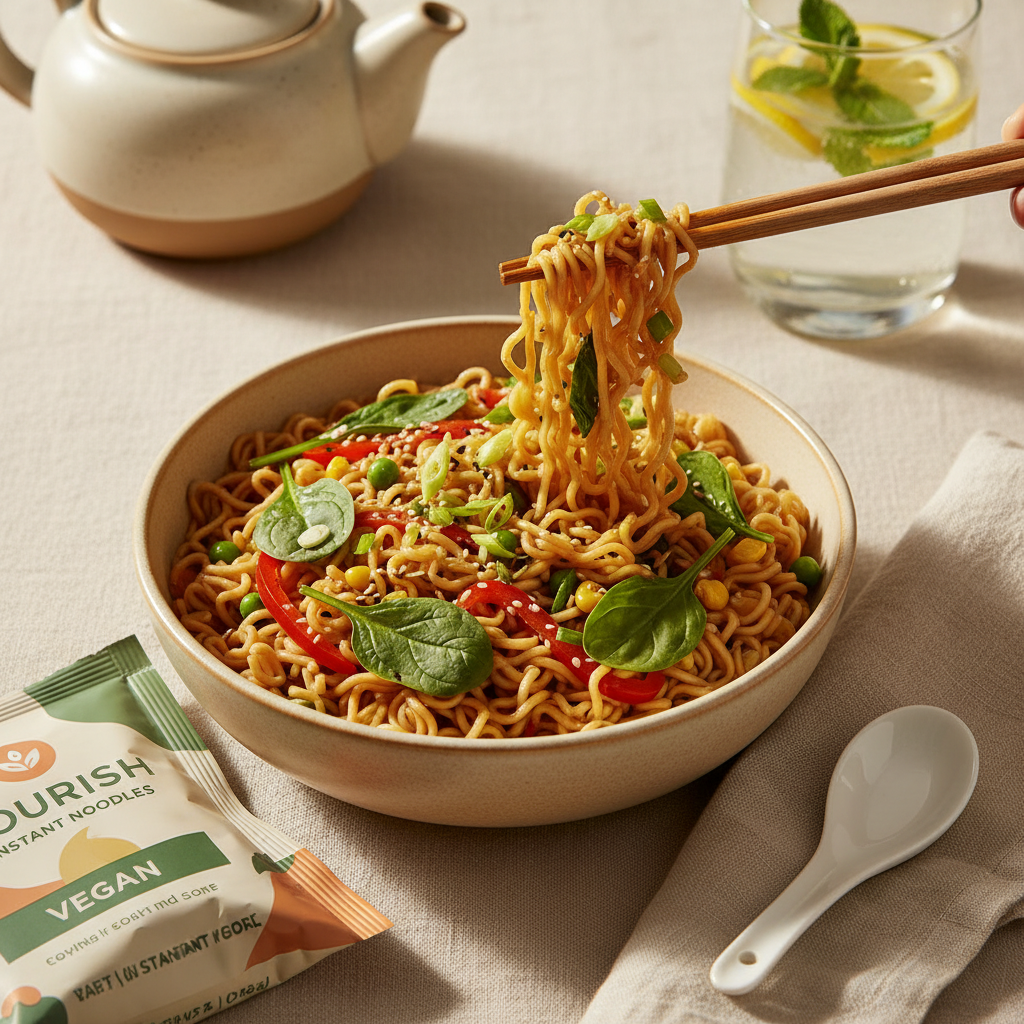
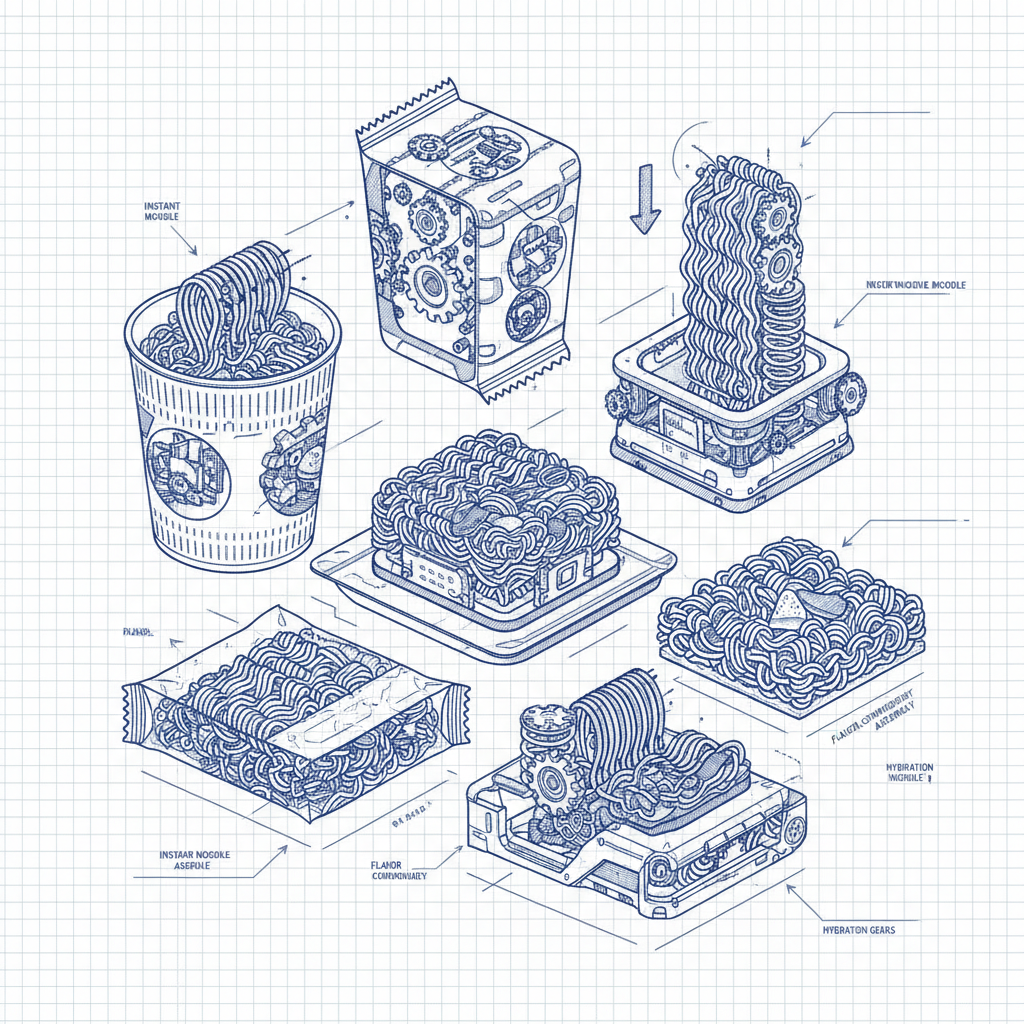
The global shift toward plant-based diets has fundamentally transformed the convenience food sector, placing vegan instant noodles at the forefront of a culinary revolution. No longer just a niche product for strict vegans, these noodles cater to a growing demographic of "flexitarians" and health-conscious consumers who seek quick meals without compromising their ethical values or nutritional needs.
From a manufacturing perspective, the transition to plant-based ingredients requires a sophisticated understanding of food chemistry to replicate the satisfying "bite" and rich flavor profiles typically associated with traditional noodles. The integration of high-quality flour, natural binders, and plant-derived seasonings ensures that convenience does not come at the cost of quality or sustainability.
Understanding the nuances of vegan instant noodles allows businesses and consumers alike to appreciate the intersection of food technology and environmental stewardship. By eliminating animal-derived additives, the industry is not only reducing its carbon footprint but also opening doors to a more inclusive global food system.
Global Market Dynamics of Vegan Instant Noodles
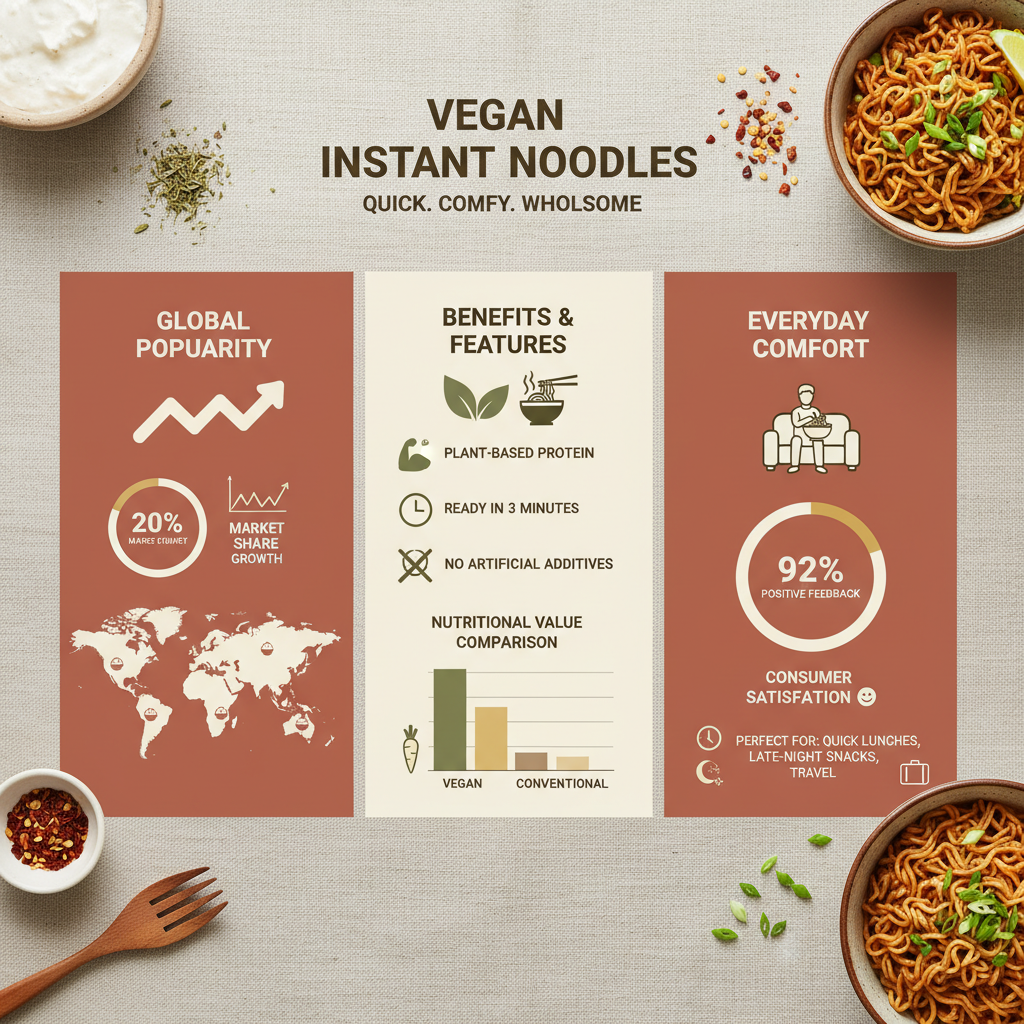
The rise of vegan instant noodles is mirrored by a global surge in conscious consumption. Data from market research indicates a double-digit growth rate in the plant-based convenience sector, driven largely by urbanization and an increasing awareness of the environmental impact of livestock farming. In regions like Southeast Asia and North America, consumers are actively seeking alternatives that provide the comfort of a quick meal without the ethical baggage of animal-based ingredients.
However, the industry faces a critical challenge: overcoming the "flavor gap." Traditional instant noodles often rely on animal fats and fish-based extracts for depth of flavor. To compete, manufacturers are now leveraging fermented plant proteins and mushroom-based umami enhancers to ensure that vegan options are not just "acceptable" alternatives, but superior culinary experiences.
Defining the Standards of Plant-Based Convenience
At its core, vegan instant noodles are defined as pre-cooked, dried noodles and accompanying seasonings that contain absolutely no animal-derived components, including lard, gelatin, or egg. This definition extends beyond simple ingredient exclusion; it encompasses the entire production chain, ensuring that no cross-contamination occurs during the manufacturing process.
In the context of modern food industry standards, these products address the urgent need for inclusive nutrition. As dietary restrictions—whether for health, religion, or ethics—become more common, the demand for a standardized "universal" noodle that can be enjoyed by everyone has grown. This has led to the development of specialized certifications to verify vegan claims.
Furthermore, the connection to humanitarian needs is evident in food security initiatives. Plant-based noodles are often more stable in storage and more cost-effective to produce at scale than animal-based equivalents, making them an ideal solution for food relief in diverse cultural settings where animal products may be prohibited or unavailable.
Core Components of High-Quality Vegan Noodles
To achieve the perfect texture in vegan instant noodles, manufacturers focus on "Elasticity and Tensile Strength." By optimizing the gluten network in wheat or using hydrocolloids in gluten-free varieties, producers can ensure the noodles remain firm and chewy even after rapid rehydration.
Another critical factor is "Umami Scaling." Since traditional bone broths are unavailable, the industry employs a blend of yeast extracts, soy proteins, and dried shiitake mushroom powders to create a rich, savory base that mimics the depth of animal-based stocks in vegan instant noodles.
Lastly, "Nutritional Fortification" is paramount. To elevate the product from a simple snack to a meal replacement, the addition of pea protein, fortified vitamins, and organic fiber ensures that vegan instant noodles provide a balanced macronutrient profile.
Performance Metrics in Noodle Production
Measuring the success of a plant-based noodle requires a blend of sensory analysis and technical testing. Key performance indicators (KPIs) include the rehydration rate, the stability of the noodle structure during boiling, and the solubility of the plant-based seasoning powder. These metrics ensure that the consumer experience is consistent across different batches.
By analyzing different production methods, we can see a clear distinction in how various ingredients affect the final quality of vegan instant noodles. The following data illustrates the comparative ratings of different manufacturing approaches.
Comparative Quality Ratings of Vegan Noodle Methods
Real-World Applications and Consumption Trends
In the modern urban landscape, vegan instant noodles have found their place in diverse settings. From high-paced corporate offices in Tokyo to university dormitories in London, these products serve as a reliable, ethical fuel for individuals who lack the time for slow cooking but refuse to compromise their dietary principles.
Beyond individual consumption, we see a rise in institutional adoption. For example, in disaster relief operations, providing plant-based options ensures that aid is culturally sensitive and accessible to people of all dietary restrictions, regardless of their religious or ethical background, thereby maintaining dignity and inclusivity in crisis management.
Sustainability and Long-Term Value Propositions
The transition to vegan instant noodles offers profound environmental advantages. By removing animal ingredients, the production cycle significantly reduces greenhouse gas emissions and water usage. The logic is simple: plant-based proteins require a fraction of the land and resources compared to animal proteins, creating a scalable model for a growing global population.
From a brand perspective, the long-term value lies in trust and innovation. Companies that invest in clean-label, vegan-certified products build a stronger emotional connection with the "Gen Z" and "Millennial" demographics, who prioritize transparency and sustainability over brand legacy.
Moreover, the reliability of these products in the supply chain is a major asset. With fewer concerns regarding animal-product perishability or specific cold-chain requirements for certain additives, vegan options often exhibit better shelf-life stability, reducing food waste at the retail level.
Future Innovations in Vegan Noodle Technology
The future of vegan instant noodles lies in the integration of biotechnology and sustainable farming. We are seeing the emergence of "precision fermentation," where microorganisms are programmed to produce specific proteins that mimic the exact taste and texture of traditional egg noodles or cream-based broths without any animal involvement.
Digital transformation is also playing a role, with AI-driven flavor profiling allowing manufacturers to customize seasoning blends for different regional palates in real-time. This ensures that a vegan noodle produced in one country can perfectly match the local "comfort food" profile of another.
Finally, the shift toward biodegradable packaging is the final piece of the puzzle. To truly be "vegan" in spirit, the product must not only be animal-free but also planet-friendly, moving away from plastic cups toward compostable, seaweed-based or mycelium-based packaging.
Comparative Analysis of Vegan Noodle Innovation Dimensions
| Innovation Dimension |
Current Standard |
Next-Gen Goal |
Impact Score (1-10) |
| Protein Source |
Soy/Wheat Gluten |
Precision Fermentation |
9 |
| Umami Base |
Yeast Extract |
AI-Optimized Fungals |
8 |
| Packaging |
Recyclable Plastic |
Home Compostable |
10 |
| Drying Method |
Hot Air Drying |
Vacuum Freeze-Drying |
7 |
| Nutrient Density |
Basic Fortification |
Bio-available Micro-nutrients |
8 |
| Processing Speed |
Semi-Automated |
Fully Autonomous AI-Line |
9 |
FAQS
The primary difference lies in the total absence of animal-derived ingredients. While regular noodles may use egg in the dough or lard and fish extract in the seasoning, vegan instant noodles utilize plant proteins, vegetable oils, and natural umami enhancers like mushroom or yeast extracts. This makes them suitable for vegans, vegetarians, and those with specific dairy or egg allergies.
Health depends on the ingredients. Many vegan instant noodles are now formulated with organic flours, low-sodium seasonings, and added plant proteins to increase nutritional value. To ensure health, look for "air-dried" rather than "deep-fried" options and check for a low saturated fat content in the ingredient list.
Manufacturers use "Umami Chemistry." By combining glutamates found naturally in tomatoes, mushrooms, and fermented soy, they can replicate the savory depth of meat. Advanced techniques also include the use of hydrolyzed vegetable proteins (HVP) and specific yeast extracts that trigger the same taste receptors as animal-based broths.
Yes, many brands now offer gluten-free vegan instant noodles using rice flour, buckwheat (soba), or cornstarch. These options are designed to provide the same convenience and flavor while catering to those with Celiac disease or gluten sensitivities, often utilizing gums like xanthan to maintain the noodle's structural integrity.
Initially, sourcing high-quality plant-based alternatives to animal fats was more costly. However, as the scale of production for vegan instant noodles has increased, economies of scale have brought prices down. In many cases, plant-based raw materials are now more cost-stable than animal-based ones, which are subject to higher volatility.
Look for a certified "V-Label" or a "Certified Vegan" logo. Additionally, scan the ingredients for hidden animal products like whey, casein, gelatin, or L-cysteine (which can be animal-derived). Reputable brands of vegan instant noodles will clearly state "100% Plant-Based" and list all sources of protein and fats.
Conclusion
The evolution of vegan instant noodles represents a broader transition toward a more sustainable and inclusive global food system. By combining cutting-edge food science with ethical sourcing, the industry has proven that convenience does not have to come at the expense of the planet or animal welfare. From the optimization of umami flavors to the implementation of biodegradable packaging, every step forward enhances the value proposition for the modern consumer.
Looking ahead, the continued integration of AI and biotechnology will likely erase the remaining sensory differences between plant-based and traditional noodles, making vegan options the default choice for the global population. For businesses, the key to success lies in transparency, nutritional density, and a commitment to green innovation. We invite you to explore the future of plant-based convenience. Visit our website: www.jxsemidrynoodles.com