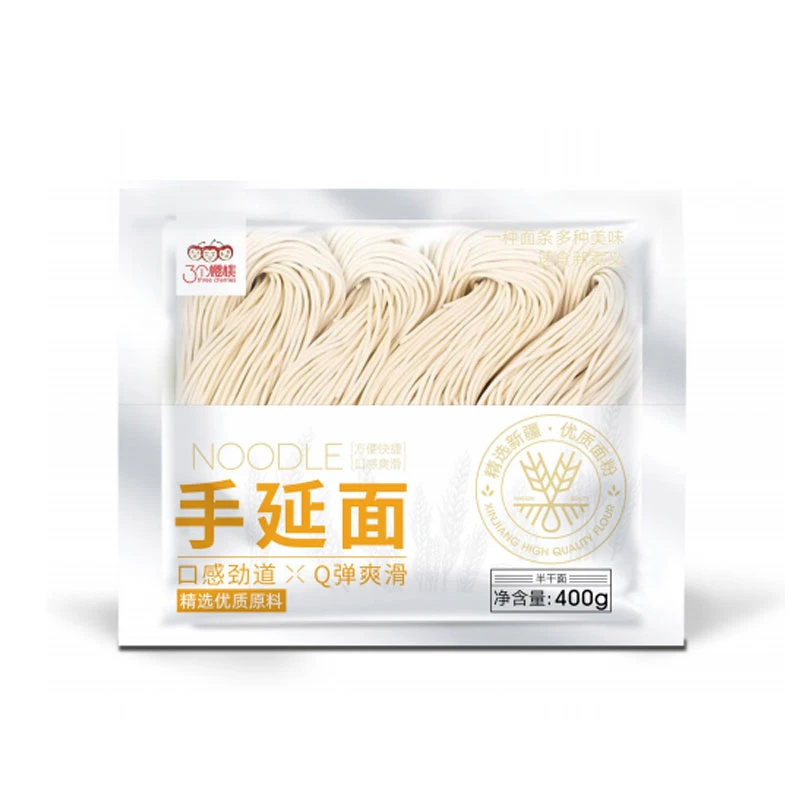

Different Kinds of Udon Noodles | Industrial Dry Udon Overview
Exploring the Different Kinds of Udon Noodles
Having spent a good part of my career working alongside industrial equipment suppliers and manufacturing lines, I never quite imagined I'd end up fascinated by something as seemingly simple as udon noodles. But oddly enough, in the world of dry noodle production, these thick, chewy Japanese wheat noodles represent a neat intersection of tradition, product design, and food-grade manufacturing precision.
You know, when I first bumped into udon during a supplier visit in Japan, what struck me was just how much variety there is beneath the umbrella term “udon.” Frankly, it’s not just about thickness or texture – it’s about the wheat blend, the drying technique, even the regional preferences tied to local water qualities. I suppose that attention to detail is what makes this industry endlessly intriguing.
Industrially speaking, producing udon involves managing hydration carefully—too little and the noodles turn brittle; too much, and they stick. The wheat flour selected usually has moderate protein content, striking a balance between elasticity and firmness. Manufacturers often tweak the recipe slightly depending on whether the noodles are intended to be used fresh, semi-dry, or fully dried. From a mechanical standpoint, controlling extrusion pressure and drying temperature can completely alter the noodle’s mouthfeel. Nearly like running a precision machine, but for food.
Common Types and Their Specs
Below is a handy summary of the main udon noodle types and their key product specs that I’ve seen categorized by manufacturers. You’ll notice differences not just in thickness, but also moisture content and dry weights – all crucial for industrial handling, packaging, and shelf life.
| Type | Thickness (mm) | Moisture Content (%) | Drying Method | Typical Uses |
|---|---|---|---|---|
| Sanuki Udon | 2.4 – 3.0 | 35 – 40 | Semi-dry | Soups, stir fry |
| Inaniwa Udon | 1.5 – 2.0 | 12 – 15 | Air-dried | Cold dishes, salads |
| Ito Udon | 0.7 – 1.0 | 10 – 12 | Thin dry | Light soups, quick stir fry |
Comparing Leading Vendors for Industrial Udon Supplies
When it comes to sourcing, I’ve noticed some vendors stand out for their reliability and product consistency — both of which are critical if you work in the supply chain or foodservice sectors. Here’s a simple side-by-side I made from my own sourcing experience:
| Vendor | Product Range | MOQ (Minimum Order Qty) | Customization | Lead Time | Price Competitiveness |
|---|---|---|---|---|---|
| JX Semi Dry Noodles | Varieties of semi-dry udon including custom thickness | 500kg | Available on request | 3-4 weeks | Moderate to Low |
| Yamato Food Supply | Mostly air-dried udon; less customization | 800kg | Limited | 4-6 weeks | Mid-range |
| Nihon Flour Co. | Full range including fresh noodle lines | 1000kg | Highly customizable | 2-3 weeks | Higher |
One small yet telling story: A mid-sized foodservice factory I visited recently switched to JX Semi Dry Noodles after struggling with breakage issues on thinner udon lines. The consistency in drying and slightly higher moisture content helped them reduce wastage by more than 12% — which, frankly, is a lot when you’re talking bulk supply. That kind of impact sticks with you.
In real terms, if you’re in the industrial or food manufacturing sector looking to integrate udon noodles into your lineup, keep in mind the subtle interplay of noodle specs and supply reliability — it’s more than just flavor; it’s about operational smoothness too.
It feels like the more you dig, the more respect you gain for how intricate the world of noodles can be. Simple but never simple, you know?
References
- “Japanese Udon Noodles: Production and Processing” – Food Industry Journal, 2021
- Supplier insights from JX Semi Dry Noodles internal data, 2023
- Field reports from food manufacturing visits, 2018–2023
-
Discover the Authentic Taste of Korean Buckwheat NoodlesNewsApr.16,2026
-
Discover the Refreshing Taste of Authentic Korean Cold SobaNewsApr.09,2026
-
Discover the Refreshing Taste of Korean Cold Buckwheat Noodles NaengmyeonNewsApr.07,2026
-
Discover the Cool and Refreshing World of Korean Buckwheat Noodles ColdNewsApr.04,2026
-
Discover the Refreshing Taste of Japanese Cold Buckwheat Noodles and Zaru SobaNewsMar.31,2026
-
Exploring the Delicious World of Chinese Style Cold NoodlesNewsMar.28,2026
-
Discover the Cool and Refreshing World of Korean Cold Soba NoodlesNewsMar.26,2026
Browse qua the following product new the we