Choosing Konjac Soba Noodles: Application Fit and Specification Checks Before You Buy Soba Noodles
THE BUYER'S GUIDE / SELECTION
Choosing Konjac Soba Noodles: Application Fit and Specification Checks Before You Buy Soba Noodles
A buyer-focused guide for distributors and procurement teams who plan to buy soba noodles from Hebei Jinxu Noodles Co., Ltd. It compares confirmed pack sizes, shelf life, storage conditions, formulation notes and channel fit for the Low GI Konjac Soba Noodles and four related soba lines. It also lists the points buyers still need to confirm, including calorie data, certificate details, pricing and lead times.

Storage chain: room temperature (cool, dry place) versus 0-10℃ refrigeration
Shelf life: 4 months ambient / 8 months cold storage for most lines; 9 months ambient for Rye and Buckwheat Udon; 4 months refrigerated for Organic Soba Noodles
Pack size and format: 220g/225g ready-to-eat with seasoning pack, 250g × 4, 278g, 300g, 400g
Formulation: rye whole wheat, konjac and buckwheat with no added white flour (Low GI Konjac Soba); buckwheat-based (Soba Noodles, Organic); a 70% blend of buckwheat, konjac, barley and tartary buckwheat (Low GI70)
Documented claims: GI 49.5 test report and low GI certification (konjac line), national invention patent (Low GI70), organic food certification (Organic line); request the supporting documents
Channel fit: health retail, classic buckwheat retail, convenience/school/e-commerce, organic retail
Choosing Konjac Soba Noodles: Application Fit and Specification Checks
Before you buy soba noodles for distribution, retail or food service, check which product fits your storage chain, pack format and target customer. You also need to know which claims you can document. This guide uses only the confirmed product information published by Hebei Jinxu Noodles Co., Ltd. It does not cover pricing, lead times, minimum order quantities or market-specific compliance. Confirm those directly before you order.
1. Start with your buyer constraints
Answer these questions before you compare products:
- Storage chain: Can you hold products in cold storage at 0-10℃, or only at room temperature in a cool, dry place?
- Shelf-life window: How long does stock usually sit in your warehouse and on the shelf?
- Pack format: Do you need single retail packs, multi-packs or ready-to-eat formats with a seasoning pack?
- Positioning: Are you building a low GI range, an organic range, a classic buckwheat range or a convenience range?
- Which claims will you make on labels or listings?
2. Specification comparison
| Product (as published) | Size | Shelf life | Storage | Key formulation notes from product page |
|---|---|---|---|---|
| Low GI Konjac Soba Noodles | 300g | 4 months at room temperature, 8 months in cold storage | Cool and dry place or 0-10℃ refrigeration | Rye whole wheat, konjac and buckwheat; no added white flour |
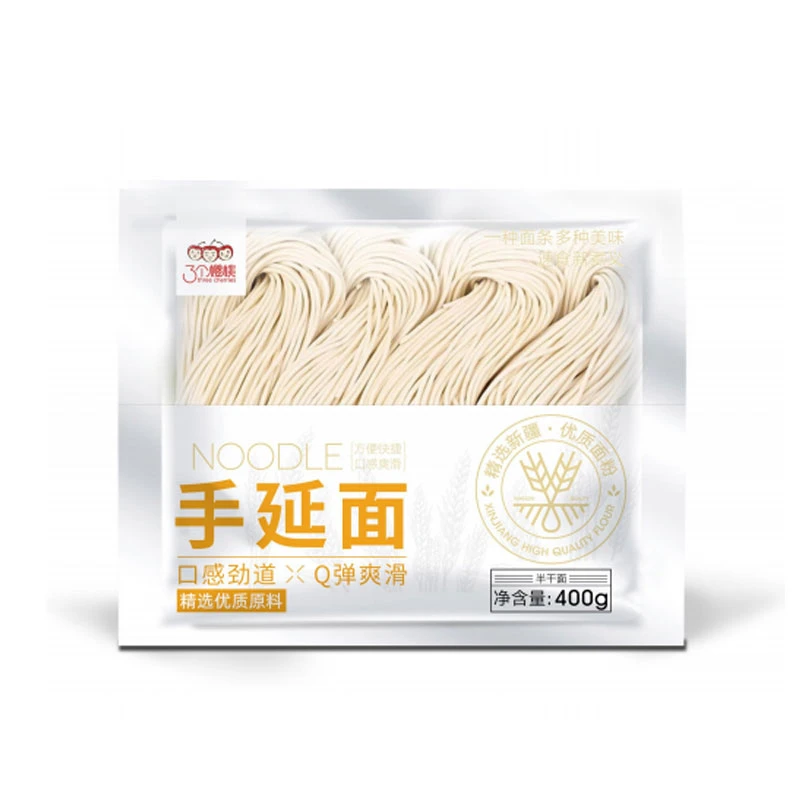
| Buckwheat Noodles & Knife-cut Buckwheat Noodles (Soba Noodles) | 400g | 4 months at room temperature, 8 months in cold storage | Cool and dry place or 0-10℃ refrigeration | Buckwheat-based, aiming to keep buckwheat flavor with a smoother, firmer texture |
| Low GI70 Soba Noodles (Sichuan spicy) | 278g | 4 months at room temperature, 8 months in cold storage | Cool and dry place or 0-10℃ refrigeration | Describes a 70% addition of ingredients including buckwheat, konjac, barley and tartary buckwheat |
| Rye and Buckwheat Udon (spicy & seafood) | 220g & 225g | 9 months at room temperature | Room temperature or 0-10℃, away from light in a cool, dry place | Ready-to-eat format with a seasoning pack |
| Organic Soba Noodles | 250g × 4 packs | 4 months refrigerated | 0-10℃ refrigerated storage only | Buckwheat-based organic line |
Two published product pages for the Low GI Konjac Soba Noodles list the same size, shelf life, storage and selling points. Treat them as one specification set, not as two separate products.
3. Application fit by product
Low GI Konjac Soba Noodles (300g)
This is the topic product for this guide. The product page says it is made with rye whole wheat, konjac and buckwheat and has no added white flour. It also says:
- A test report from the Beijing Nutrition Source Research Institute gives a GI of 49.5.
- The product has received a state-issued low GI food certification.
- The noodles are 0 fat and high in fiber.
The listed target consumers include people managing sugar intake, fitness-focused buyers, sub-healthy groups, people with the "three highs" chronic conditions and pregnant mothers.
Best fit: Health-focused retail or distribution ranges that need a documented low GI position and can use either room-temperature or cold storage.
Check before ordering: Ask for copies of the GI test report and the low GI certification. Then confirm whether they are accepted in your target market (for example the United States, Europe, the Middle East or Southeast Asia). Health claims for consumer groups such as people with chronic conditions or pregnant women are regulated differently in each market. Review them with your own compliance team before you use them.
Soba Noodles: Buckwheat & Knife-cut Buckwheat Noodles (400g)
The product page calls buckwheat noodles one of the company's signature products. It says they keep the original flavor of buckwheat while giving a smoother, firmer texture than traditional multigrain noodles. This is the largest single pack in the confirmed range.
Best fit: Buyers looking for classic buckwheat soba noodles for sale in a larger retail pack, without a specific low GI or organic claim.
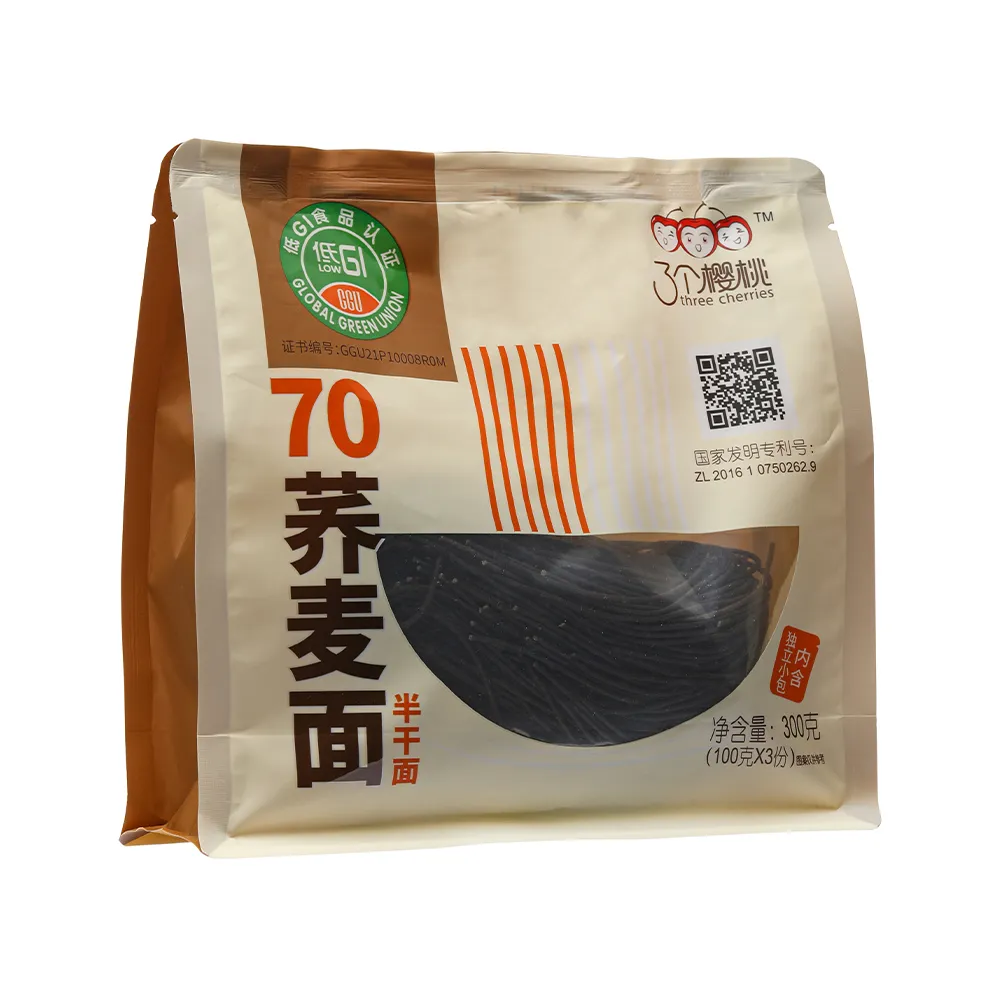
Low GI70 Soba Noodles, Sichuan Spicy (278g)
The product page says this line holds a national invention patent. It describes a 70% addition of ingredients including buckwheat, konjac, barley and tartary buckwheat, together with patented technology aimed at a low glycemic rise.
Best fit: Ranges that want a flavored low GI option.
Check before ordering: The published wording about the formula is not fully clear. Ask for the exact ingredient list, the patent details and any supporting test data before you make claims on labels or listings.
Rye and Buckwheat Udon, Spicy & Seafood (220g / 225g)
This is the closest match in the confirmed range for buyers searching for a soba instant noodle format. The product page says the noodles are ready in 60 seconds, are 0 fat and come with a seasoning pack. It names convenience stores, schools and e-commerce as suitable channels. It also has the longest room-temperature shelf life in the comparison: 9 months.
Best fit: Convenience, school and online channels where no cold chain is available.
Limit: This is an udon-style rye and buckwheat noodle, not a classic soba cut.
Organic Soba Noodles (250g × 4 packs)
The product page says this line has received organic food certification and is a 0 fat buckwheat noodle. It must be kept refrigerated at 0-10℃ and has a 4-month refrigerated shelf life.
Best fit: Organic-focused retail with a reliable cold chain.
Does not fit: Ambient-only distribution.
Check before ordering: Ask which body issued the organic certification. Then confirm whether your target market recognizes it.
4. About "low calorie soba noodles"
Many buyers search for low calorie soba noodles. The confirmed materials describe several lines as 0 fat and describe the konjac line as high in fiber and low GI. However, they do not give calorie values or full nutrition panels. Do not market any of these products as low calorie until you have a nutrition analysis that meets the labeling rules in your market.
5. When these recommendations do not apply
- You need confirmed pricing, MOQ, lead times or private-label terms. None of these are covered here, so request a quotation directly.
- You need certifications other than those named above. Examples include food safety system, halal or kosher certification. The confirmed materials do not mention them.
- You need calorie or full nutrition data. Request lab data before you list the products.
- You have no cold chain. Choose the Rye and Buckwheat Udon or the room-temperature options, and avoid the Organic Soba Noodles.
6. Buyer checklist
- Match each product's storage and shelf-life profile to your logistics.
- Pick a pack size for your channel: 220g-225g ready-to-eat, 250g × 4, 278g, 300g or 400g.
- Request copies of the GI test report, the low GI certification, the organic certification and the patent documents for any claim you plan to use.
- Confirm ingredient lists and allergen information. Buckwheat and wheat-based ingredients appear in these products.
- Confirm pricing, lead time and labeling requirements for your target market with Hebei Jinxu Noodles Co., Ltd.
THE PEOPLE

About the author
THE COMPANY
Hebei Jinxu Noodles Co., Ltd.
Hebei Jinxu Noodle Industry Co., Ltd. was established in 2013 Headquartered in Xingtai, Hebei Province, covering an area of 40,000 square meters, with 5 noodle product production workshops and 1 assembly workshop, it has more than 600 employees; The branch is located in Nantong, Jiangsu, with 2 noodle product production workshops and an annual output of 90,000 tons, making it the largest semi-dry noodle manufacturer in China.…
About Us ↗Visit company website ↗YOUR NEXT STEP
Bring your brief. Start a useful conversation.
Use case, specification, quantity and delivery window: make the next conversation specific.
-
Cart Noodles: Match Flavor, Cooking Speed, and Storage to Your OperationNewsNov.23,2026
-
How to Choose a Wet Noodle for Catering and RetailNewsNov.17,2026
-
Soba Noodles Low GI: Konjac Soba or Braised Beef Pack?NewsNov.02,2026
-
Soba Noodles and Diabetes FAQ: Specifications, Ordering and Support QuestionsNewsOct.28,2026
-
Hand Pulled Noodles Buy Guide: Choosing Lanzhou Style Pulled Noodles by Storage, Pack Size and Application FitNewsOct.24,2026
-
Choosing Egg Noodles: Application Fit and Specification ChecksNewsOct.24,2026
-
Choosing Fresh Bamboo Rising Noodles: Application Fit and Specification Checks for Buyers Evaluating a Fresh Noodles SupplierNewsOct.24,2026
Browse qua the following product new the we