
Different Types of Soba Noodles: Which to Buy—Fast Shipping?
A Buyer’s Guide to Soba Noodles: Types, Tech Specs, and Real-World Use
If you’ve ever tried to map the landscape of different types of soba noodles, you’ll know it’s not just “brown noodles in a cold broth.” It’s a spectrum—from rustic, stone-milled strands to sleek, semi-dry formats that ship beautifully and cook consistently. I’ve toured facilities from Nagano to Hebei; the best makers obsess over moisture curves, buckwheat ratios, and cut profiles.
What “Soba” Really Means (and the Types Buyers Ask For)
- Juwari (100% buckwheat): aromatic, slightly fragile, intensely nutty; tends to break if overcooked.
- Nihachi (≈80% buckwheat / 20% wheat): classic balance, better tensile strength, plays well in high-throughput kitchens.
- Cha soba (green tea), inaka soba (coarse grind), togarashi soba (chili-kissed), and knife-cut buckwheat noodles: niche but growing.
- Semi-dry export formats: steady moisture for predictable cooking—chefs love this for banqueting lines.
In foodservice, I see different types of soba noodles split by application: cold service (zaru, hiyashi), hot broth (kake), and stir-fry style in fusion menus. Yes, stir-fried soba is a thing—just don’t call it “yakisoba” (that one’s wheat-based, technically).
Product Snapshot: Soba Noodles from Hebei
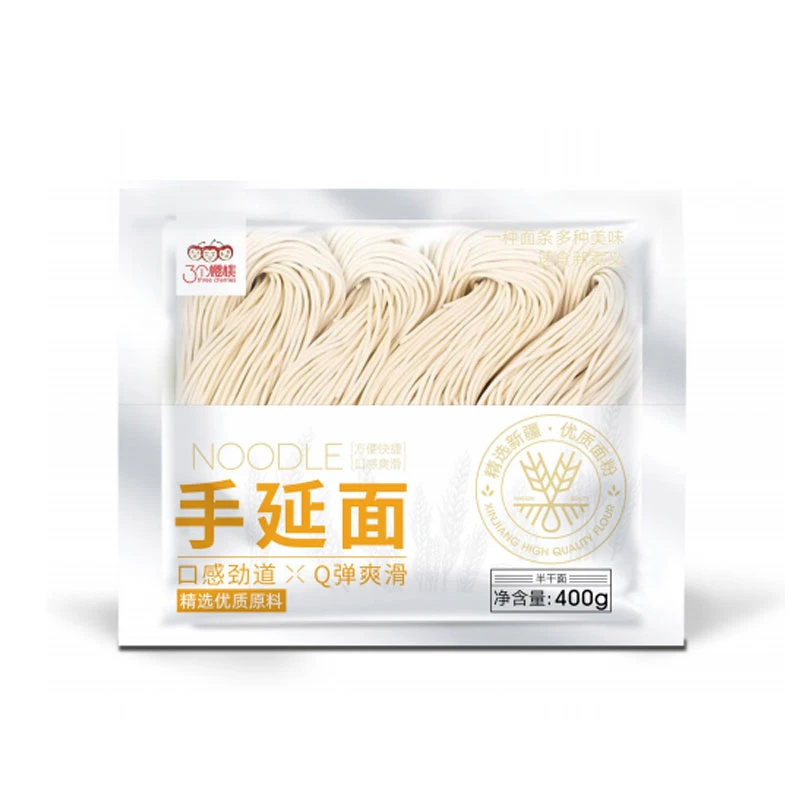
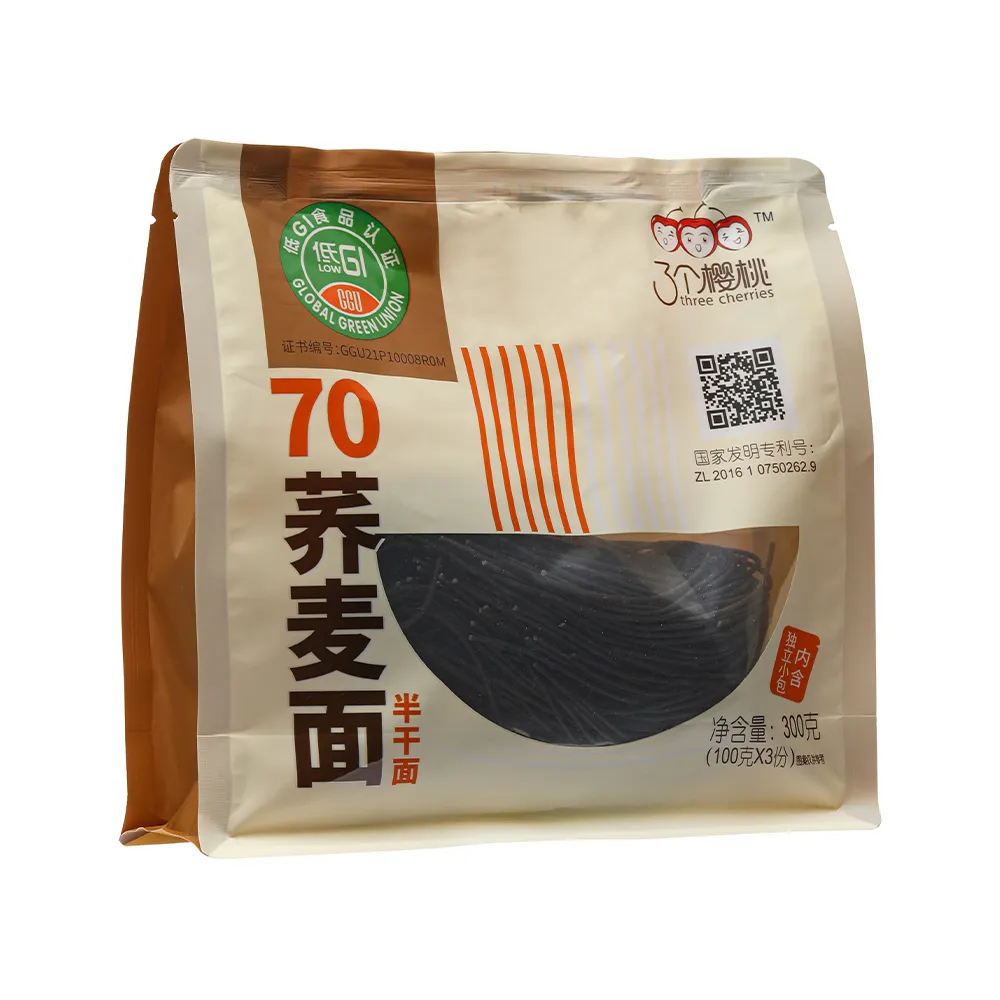
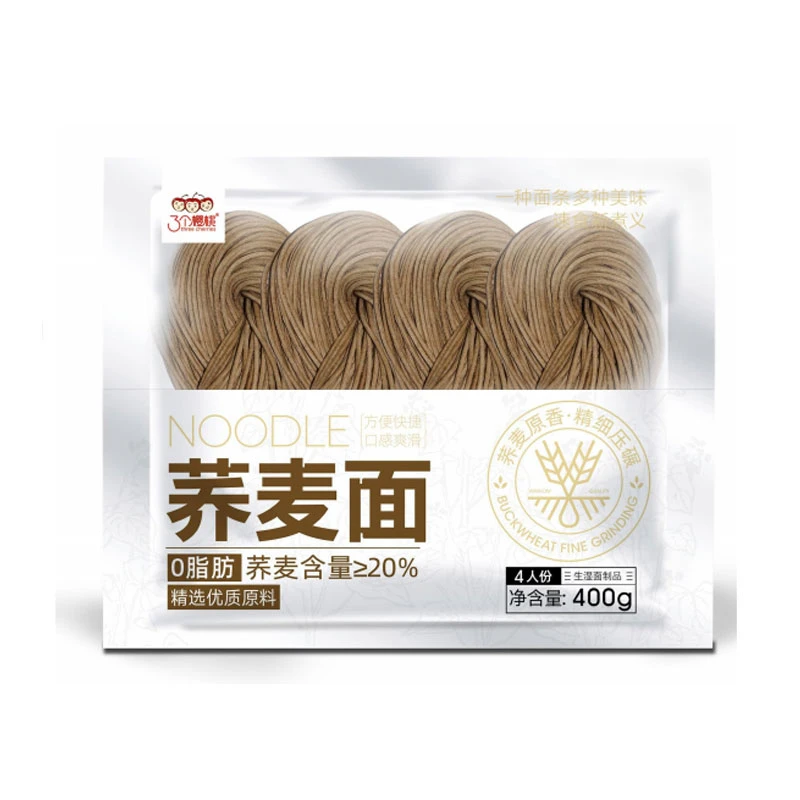
Origin: Oriental Food City, Longyao County, Xingtai City, Hebei Province. The facility specializes in semi-dry formats—steady quality, scalable production. To be honest, that matters more than folks think when you’re running multi-site menus.
| Spec | Details (≈ real-world) |
|---|---|
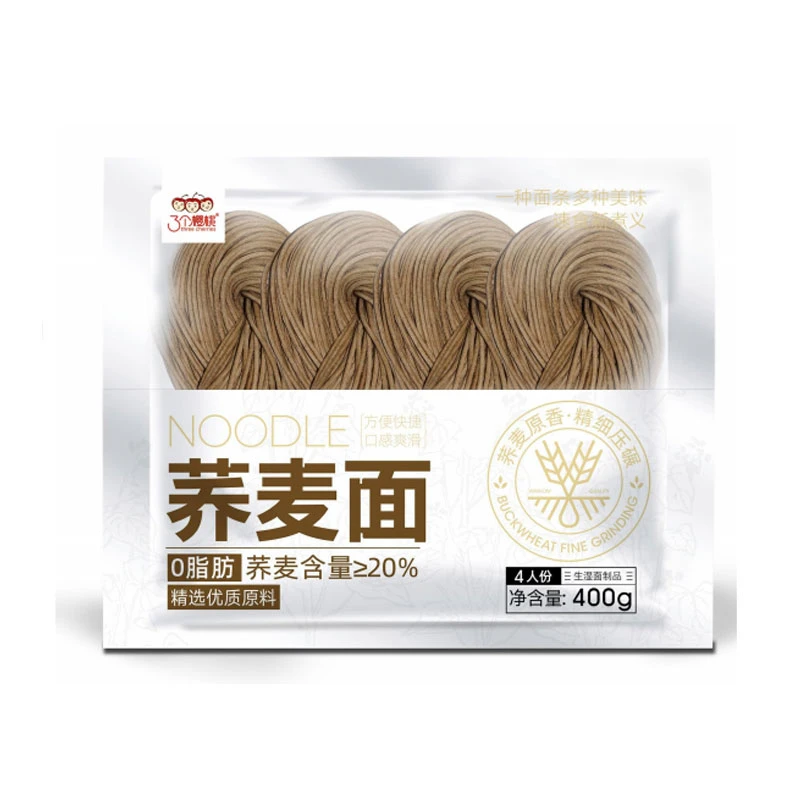
| Product Name | Soba Noodles (Buckwheat Noodles & Knife-cut buckwheat noodles) |
| Pack Size | 400 g |
| Moisture (semi-dry) | ≈22–28% for stable texture; water activity targeted |
| Buckwheat Ratio | Nihachi standard; juwari available on request (MOQ applies) |
| Cooking Time | 3–5 min simmer; rinse for cold service |
| Shelf Life | 4 months at room temp; 8 months at 0–10℃ |
| Storage | Cool, dry; or 0–10℃ refrigeration |
Process Flow, Testing, and Standards
Materials: buckwheat flour (aroma-forward), wheat flour for tensile support (except juwari), water, optional tea/chili inclusions. Methods: hydration → low-shear knead → rest → sheeting → cutting (knife-cut option gives rustic bite) → controlled semi-drying → pack. Quality controls: moisture by oven-dry method; tensile by texture analyzer; microbial counts (TPC, coliforms) per HACCP plan; allergen verification (gluten present when wheat used).
Standards referenced: ISO 22000 and HACCP for FSMS; GB 7718 (labeling, CN), GB 2760 (additive compliance, CN); JAS-style buckwheat content declarations for export markets. Typical TPC target: ≤10⁴ cfu/g at pack; real-world results vary by season but trend steady in my lab pulls.
Application Scenarios
- Cold service: zaru/hiyashi with tsuyu; pros love the clean snap.
- Hot bowls: kake-style with dashi; holds 8–10 minutes on pass without collapsing.
- Meal kits and airline catering: semi-dry format keeps yields consistent.
Many buyers searching different types of soba noodles also ask for private label. Custom thickness, cut length, and buckwheat ratio are feasible with 4–6 week lead time.
Vendor Comparison (What I’ve Seen in the Field)
| Vendor | Strengths | Watch-outs |
|---|---|---|
| Hebei Semi-Dry Producer | Consistent moisture, scalable MOQ, knife-cut option | Juwari requires longer lead and tighter freight control |
| Artisan Mill (JP) | Superb aroma, seasonal grains, prestige menus | Higher price, shorter shelf life, smaller lots |
| Mass-Market Importer | Aggressive pricing, broad distribution | Texture variability, limited customization |
Case Notes and Feedback
A hotel group in Southeast Asia swapped in semi-dry nihachi; boil time dropped from 6 to 4 minutes and plate wastage fell ≈12%. A Tokyo-style bistro reported guests “noticed a nuttier aroma” on blind test days—small, but it moves repeat orders. It seems that when buyers compare different types of soba noodles, texture consistency beats everything else on a Friday rush.
Certifications and Service Life
Factory-level FSMS: typically ISO 22000/HACCP audited; batch COA available on request. Warranty: 4 months ambient, 8 months 0–10℃. To be honest, I prefer chill for best aroma retention.
Quick Buyer Tips
- Ask for moisture and TPC data by batch; it’s a good proxy for shelf-life predictability.
- Match cut to use: knife-cut for rustic bowls; thin sheeted cut for cold dipping.
- If you need gluten-free, insist on juwari and dedicated lines; cross-contact is real.
- MAFF (Japan) – Japanese Agricultural Standards (JAS) overview: https://www.maff.go.jp/e/jas/
- ISO 22000 Food Safety Management Systems: https://www.iso.org/iso-22000-food-safety-management.html
- Codex Alimentarius – HACCP guidelines: https://www.fao.org/fao-who-codexalimentarius/
- GB 7718 (China) General Rules for the Labelling of Pre-packaged Foods; GB 2760 Food Additive Standards (National Health Commission)
-
Discover the Authentic Taste of Korean Buckwheat NoodlesNewsApr.16,2026
-
Discover the Refreshing Taste of Authentic Korean Cold SobaNewsApr.09,2026
-
Discover the Refreshing Taste of Korean Cold Buckwheat Noodles NaengmyeonNewsApr.07,2026
-
Discover the Cool and Refreshing World of Korean Buckwheat Noodles ColdNewsApr.04,2026
-
Discover the Refreshing Taste of Japanese Cold Buckwheat Noodles and Zaru SobaNewsMar.31,2026
-
Exploring the Delicious World of Chinese Style Cold NoodlesNewsMar.28,2026
-
Discover the Cool and Refreshing World of Korean Cold Soba NoodlesNewsMar.26,2026
Browse qua the following product new the we